For people living with follicular lymphoma, progress in research matters. It shapes the treatments available today and the possibilities available tomorrow, and there has never been a more active time in follicular lymphoma research.
Earlier this year, following the American Society of Hematology (ASH) meeting in December 2025, we shared our Chief Medical Officer’s full report and a series of six “Science Simplified” articles breaking down the science for patients, families and supporters. This mid-year update continues that story, looking at what has happened since, and what may be coming next.
For many people whose FL is causing no symptoms, active surveillance, also called “watch and wait”, remains a sound and reassuring choice. FL is often slow-growing, and many people live well for years with little or no treatment.
What’s exciting is that researchers are getting better at telling people apart. A new tool called FLIPI24, alongside fresh insights into the tumour’s surrounding environment, may soon help identify who could benefit from earlier treatment, while sparing others treatment they don’t need. Rather than a simple choice between treating and observing, care is becoming more tailored to each person.
If FL returns or doesn’t respond to first treatment, the toolkit keeps growing. Bispecific antibodies bring the immune system’s own T cells into contact with lymphoma cells, while CAR T-cell therapies reprogramme a person’s immune cells to fight the cancer. Newer approaches may make these treatments more widely available, and even easier to receive, in future.
And the trusted treatments haven’t gone anywhere: established immunochemotherapy remains highly effective, offering some people very long-lasting control, and possibly even cure.
Unlike traditional chemotherapy, this approach focuses on harnessing the body’s natural defences to fight disease. Several bispecific antibodies are now approved in different settings, and researchers continue to learn more about how best to use them.
Several new treatment approvals came through in the first half of 2026, though not evenly across the world. Australia approved tafasitamab with rituximab and lenalidomide for FL that has come back or stopped responding. Canada approved mosunetuzumab, including a version given as an injection under the skin rather than a drip, which may make treatment easier to receive. In the US, the CAR T-cell therapy liso-cel moved from conditional to full approval, and European regulators backed epcoritamab in combination with lenalidomide and rituximab.
It is worth saying that approval is not the same as availability. Whether a treatment can actually be prescribed depends on separate decisions about funding in each country, and no new FL-specific approval had come through in the UK by late August.
Encouragingly, the progress we are seeing goes hand in hand with vigilance. When the medicine tazemetostat was withdrawn in March this year over safety concerns, it showed the system working exactly as it should, protecting patients and helping researchers learn. That careful, evidence-led approach is what makes genuine optimism possible.
Taken together, the picture is one of a field moving faster than it was a few years ago, when new FL approvals were rarer and mostly limited to later stages of treatment.
The next frontier is personalisation: developing reliable “biomarkers”, measurable signs in the body that predict how each person’s FL will behave and which treatment will help most. Success here could improve outcomes and ease the uncertainty so many people live with. Researchers are also working hard to predict and prevent transformation, when FL changes into a faster-growing lymphoma, and to treat it more effectively when it occurs.
“More resources are arriving, understanding is deepening, and progress is genuinely accelerating. FL remains a challenge, but the direction of travel is clear, and it’s encouraging.”
Dr Mitchell Smith, Chief Medical Officer
Acknowledgements
This article on the CMO’s mid-year report on progress in the field of FL is supported by sponsorship from AstraZeneca, Genmab, AbbVie and Incyte. All of the above have had no influence on, control of, nor input into the development or content of any article.
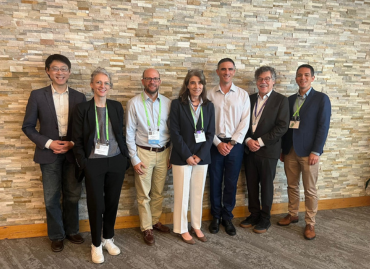


Dr Mitchell Smith’s full mid-year report explores the trial data, biomarker research and scientific meetings in more depth. It sits alongside his earlier reviews for those interested in further detail.
Each year we conduct an global survey to better understand the challenges, concerns and priorities of people living with follicular lymphoma. Discover what we learnt from this in 2025.
Help us drive life-changing research for follicular lymphoma patients by making a donation today. Your donation directly supports our efforts to advance innovative treatments and bring cure closer.