The moment someone hears the words “You have follicular lymphoma” is rarely forgotten. For some, the diagnosis arrives after weeks of unexplained symptoms. For others, it comes during a routine scan. One person may begin treatment immediately. Another may hear something equally unsettling: “We’re going to watch and wait.”
Questions come quickly. For decades, many had only partial answers. That is changing and one of the most powerful drivers of progress is not found in a lab. It is found in the experiences and real-world data of people living with the disease themselves.

Every person with follicular lymphoma carries information no medical textbook can provide: the exhaustion after treatment, the anxiety before a scan, the challenge of returning to work. While clinical trials remain essential, they cannot answer every question patients ask. People want to know what it is really like to live with follicular lymphoma for years, which treatments work best in everyday life, and what happens after relapse.
Increasingly, researchers are turning to patient experiences and their data to find those answers.
Behind every medical record is a person. A mother attending her daughter’s wedding after treatment. A grandfather deciding whether to start therapy. When thousands of these experiences come together, patterns emerge that no single clinic could ever see alone. Researchers can learn which treatments provide long-term benefit, understand the true impact on quality of life, and identify what helps people thrive, not simply survive.
This real-world data complements clinical trials in a vital way. Where trials test a specific treatment in a selected group, real-world data reflects the full breadth of experience: different ages, other health conditions, and the unpredictable texture of everyday life.
In our webinar earlier this year, we heard how patient data has already bought revolutionary change. When large datasets are brought together, the discoveries can be remarkable.
In a UK project called “Routes to Diagnosis” researchers pooled around ten years of patient records for different cancers to ask one simple question: how did people arrive at their diagnosis, and did that affect survival? The findings changed the entire approach to cancer policy. Around a quarter of patients were being diagnosed via emergency routes, with worse outcomes as a result. This single insight changed how research charities funded their work, influenced political party manifestos, and shifted clinical behaviour across the UK’s National Health Service to ultimately save lives.
In follicular lymphoma specifically, observational datasets have revealed what happens more than ten years after an original diagnosis, a timeframe no conventional trial captures. Longer-term side effects, questions around fertility, bone health, and quality of life: these are things that matter enormously to patients but rarely feature in a trial protocol.
“It’s not just ‘can this treatment work?’ but ‘will this actually improve people’s lives?’ Real-world data helps us answer that.”
Dr. Peter Martin
As new therapies like CAR T-cell treatment and bispecific antibodies become standard care, sequencing questions become critical. Not just does a treatment work, but which should come first, and what does life look like years later? These are questions real-world data is uniquely placed to answer.
It is natural to wonder who can see your medical records and how they are kept safe. The reassuring answer is that multiple layers of protection are in place.
Research data is about understanding populations and improving treatments, not tracking individuals.
The data recorded during your care is potentially of enormous value to future patients, but only if it is used. Follicular lymphoma patients have a particular advantage here: because this is a focused community, patient voices carry further. When people come together to advocate for better research, longer-term outcome studies, or improved quality of life data, researchers and decision makers listen.
Medical progress happens step by step: a trial, a scientific insight, a new medicine, a shared experience, a story told. But we know it isn’t happening fast enough. We are done waiting. The Follicular Lymphoma Foundation is currently working with patients to decide how we can speed up this work and find cure, fast.

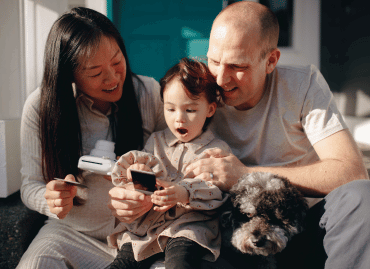

This previous webinar shares insights on how health records can be harnessed to improve care for people living with FL and the important safeguards in place. Watch the full webinar now.
Patient stories help others like yourself to feel inspired. Hearing about someone else’s journey with FL can be empowering and often contributes to the sense of community between FL patients.
Learn more about our PETReA Plus research project, an observational study collecting outcomes from newly diagnosed UK patients in real-time, as they undergo their normal, everyday care.