Busting the myth: "you might only get a sugar pill?" The truth about placebos and follicular lymphoma trials
It’s one of the biggest reasons people hesitate to join a clinical trial: what if I get randomised to the placebo group while someone else gets the real treatment?
It’s a completely understandable worry. It’s also, in follicular lymphoma, almost never how things work.
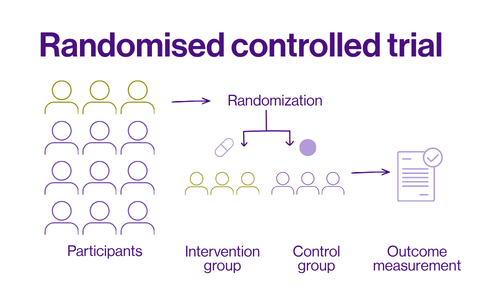
The aim of a clinical trial is to measure what difference the intervention (like the new medication) is making. This is sometimes referred to as “the treatment arm” in comparison to the other group of patients who will not get the new medication, which is sometimes referred to as “the control arm”.
Why placebos have limits
Some trials have used placebos to measure what this difference is compared to a dummy drug, which exist to rule out the “believing you’re being treated” effect (which is real and measurable). But when an effective treatment already exists and is standard practice, this is used as a comparison as it is not ethical in this case to use a placebo.
Follicular lymphoma has multiple proven treatments. That changes everything!
What you’llactually receive
In the vast majority of follicular lymphoma trials, both groups get real, active treatment.
Whereas in placebo trials researchers ask “does this drug beat nothing?” , as we already have effective treatment for FL, researchers are asking “does this drug beat what we already have?” . This means patients in the control group are still getting real medical care, not “nothing,” and researchers compare the outcomes between the groups to see if the new treatment offers a meaningful advantage.
The one exception — which isn’t as scary as it sounds
Some newly diagnosed patients with slow-growing, symptom-free disease don’t need immediate treatment at all. “Watch and wait” is a legitimate, guideline-endorsed standard of care. If a trial wants to compare their treatment to the standard watch and wait, it would be very obvious who would be in what group if a placebo wasn’t used. However, people would receive the same care of watch and wait if they were in the control arm of the trial (watch and wait) or getting standard care for these patients, it’s reflecting exactly what their doctor would recommend anyway.
You’ll always know before you agree
Every trial must explain its design including any placebo before you sign anything. What you’ll be told upfront:
Whether a placebo is involved
What the control group actually receives
Your odds of being assigned to each arm
Your right to leave at any time, with no impact on your regular care
The bottom line
Joining a trial isn’t a gamble. The era of “treatment vs. nothing” cancer trials is largely behind us. In follicular lymphoma, the question being asked is almost alwayswhich treatment works best and that means everyone gets treated.
Want to know more about clinical trials?
Sign up for our upcoming webinar ‘What no-one tells you about clinical trials and why it matters for your care’ on Tuesday 26th May 2026.
We use cookies to ensure that we give you the best experience on our website. If you continue to use this site we will assume that you are happy with it.