Every December, over 30,000 haematology experts from around the world gather for the American Society of Haematology (ASH) conference, where groundbreaking research is shared and the future of lymphoma treatment takes shape. In December 2025, the FLF team was at ASH in Orlando, USA on a clear mission: to find out the latest breakthroughs, represent you and drive progress toward a cure for follicular lymphoma.
We were pleased to see such huge amounts of research into FL happening! What is clear is that Follicular lymphoma is entering a new era, driven by immune therapies, smarter risk prediction, and a growing focus on long-term quality of life. The challenge ahead is not whether treatments work, but how to use them wisely, safely, and sustainably for each individual patient. We picked up some key themes:
Starting treatment: Many people with FL still do well without immediate treatment, and this is being refined, not abandoned. “Watch and wait” (active surveillance) remains the standard for patients without symptoms. New research suggests that some long-standing rules used to decide when to start treatment may be overly strict. Experts are now re-evaluating these criteria to better identify who truly needs early therapy and who can safely avoid unnecessary treatment.
Immunotherapy: Immunotherapy is a catch all term for any treatment that uses someone’s own immune system to fight the cancer cells. One of the biggest advances in FL in decades, new immune-based therapies are transforming FL treatment. Bispecific antibodies (a type of immunotherapy) are producing very high response rates across newly diagnosed and relapsed FL. Some studies show nearly all patients responding, even after multiple prior treatments. While these therapies are generally effective and manageable, infections remain a significant concern. Understanding how to reduce infection risk, identify who benefits most, and balance effectiveness with quality of life is now a top research priority.
Precision Medicine: As the scientific world learns more about the underlying FL biology, treatment is becoming more personalized and the “one size fits all” mindset is fading. Genetic features of the lymphoma, blood-based tests (“liquid biopsies”), and early response monitoring are increasingly guiding treatment choices. Researchers are working toward identifying both high-risk patients (who need aggressive treatment early) and low-risk patients (who can be reassured and avoid overtreatment with the accompanied side effects).
Looking at the long term: For many FL patients, the long-term outlook is better than ever. Long follow-up studies show that a substantial number of patients remain treatment-free for many years, and some may be functionally cured (i.e. they may never require any or further treatment and their FL will remain in the background without showing symptoms). After about 8–10 years, risks of progression and transformation (when FL turns into a more aggressive, faster growing cancer) drop significantly, and non-lymphoma causes of death become more common, an encouraging message for patients and families. The main challenge for the future, is finding and developing reliable tests and measures that can show definitively that a patient is effectively cured – a whole subject we can delve into deeper in a future blog!
Putting Your Priorities in Front of Decision-Makers
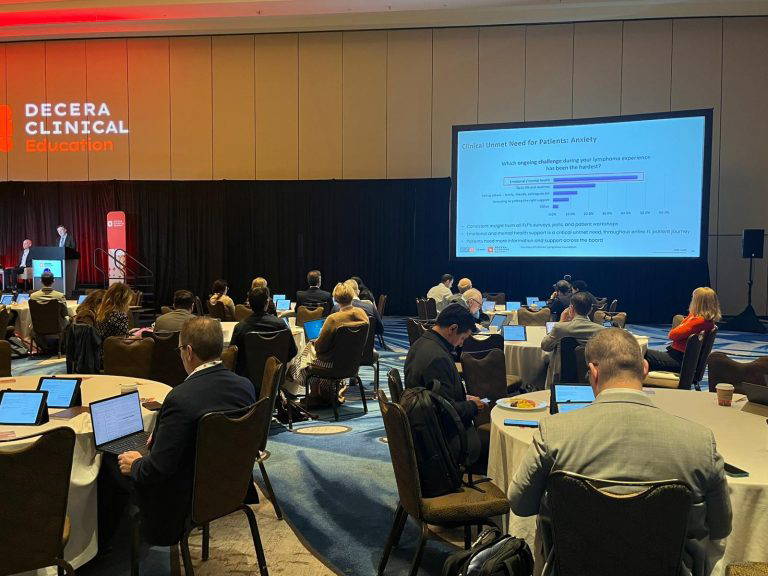
Over 100 clinicians attended our symposium live in partnership with CCO (a company that specialises in training medical professionals), and 100s more tuned in virtually. This helped healthcare professionals to understand the latest evidence on emerging treatments like bispecific antibodies and CAR-T therapy for people whose FL has returned or hasn’t responded to previous treatment. Our Chief Medical Officer, Dr. Mitchell Smith, took the stage to some of the results from the 2025 Global FL Patient Survey we ran last October. Presenting these findings directly from you; ensured your experiences, needs, and priorities were front and centre in these critical conversations – that nothing should be assumed and patients should have informed choice over their treatment.
Bringing together global leaders to find a cure
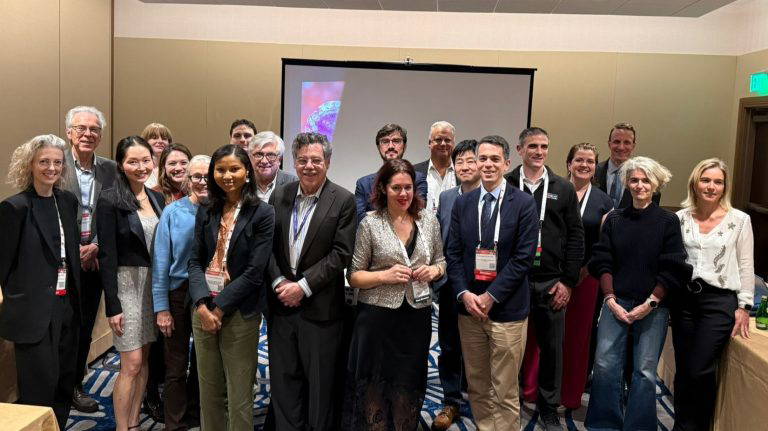
Finding a cure for FL isn’t something any single lab or institution can do alone and breakthroughs accelerate when global experts connect and collaborate. That’s exactly what we made happen at ASH 2025. For the first time, we brought together almost all of our FLF-supported researchers from across the globe (15 researchers were able to join us), creating invaluable opportunities for them to share insights, challenge assumptions, and spark innovation through this unique forum.
This network of experts from related fields that may not necessarily have interacted in this way otherwise, which is especially crucial for a rare disease like FL. After discussing the areas of research most likely to collectively bring us to a cure in FL and fast, the group shared real and practical ways they could share tools, resources, and knowledge to push each other’s projects forward. It’s through international partnerships such as these, that we at the FLF are fostering today are laying the groundwork for clinical studies and treatments of tomorrow.
Throughout 2026, we will be following the science closely, as well as taking every opportunity to bring together the brightest minds in the field. Watch this space, as we bring you along with us throughout the coming year – sharing learnings, announcing breakthroughs, convening researchers and clinicians to push forward with our mission to cure FL, all while anchoring our work and collaborations with your insights and your input.
Acknowledgements
The FLF ASH- Accelerating the cure programme, which enabled us to bring FL experts together at ASH, was supported by Incyte & BMS.
The satellite symposium was supported by educational grants from AstraZeneca; Genentech, a member of the Roche Group; Incyte Corporation; Novartis Pharmaceuticals Corporation; and Regeneron Pharmaceuticals, Inc.
The funders had no input into the programmes.